Video
License to Operate
Learn how violence interrupters leverage their lived experience to build safety in communities.
/
We can all agree that everyone deserves to live in a healthy, thriving community.
But for many communities in America, violence disrupts this dream. Community violence affects individuals, children, families, and neighborhoods — and it can create lasting fear and instability. Community violence intervention helps communities build lasting safety, healing, and hope.
What is community violence?
Community violence refers to violence that happens between people from the same community who are not related and may or may not know each other. This action generally takes place outside the home.
Community violence does not affect all communities equally. It is often concentrated in neighborhoods that have historically faced long‑standing challenges like underinvestment, limited access to mental health care, and fewer economic opportunities—meaning these same communities carry a disproportionate share of the violence, particularly gun violence.
Community violence intervention can make a difference.
Community violence intervention (CVI) is a way of preventing violence by working directly with people and neighborhoods most affected by it. This ecosystem of support involves deploying coordinated, community-driven strategies via trained credible messengers, who have built trusted relationships, step in during moments of conflict, connect people to support like counseling, jobs, and mentoring, and help stop retaliation before it starts.
Community violence intervention is one important part of the broader public safety ecosystem. Lasting safety depends on the contributions of many organizations and efforts, including offices of violence prevention, health departments, law enforcement, hospitals and social services. Safer communities are possible when a comprehensive approach is aligned with community needs and long-term investment.
CVI builds community safety by focusing on intervention, prevention, and transformation. These strategies build over time, to reduce harm, support individual healing to break cycles of violence, and strengthen the conditions that help communities thrive.
Intervention
Stopping violence in the near term by defusing conflict and disrupting cycles of retaliation by focusing on engagement with people at the highest risk of violence involvement and connecting individuals to supportive resources that strengthen long-term stability.
Prevention
Reducing the risk of future violence by addressing root causes and strengthening protective factors that support long-term safety and stability.
Transformation
Strengthening the conditions that allow communities to thrive by improving the systems and environments that shape long-term well-being, healing, and safety.
Credible messengers are trusted members of the community who have the relationships, experience, and local understanding needed to reach people at the center of conflict. Because they are known and respected, they can step into difficult moments, help defuse violence, build trust, and connect people to support that can change the course of someone’s life.
Credible messengers make community violence intervention possible. By leading with trust, credibility, and care, credible messengers help create safer pathways forward for individuals, families, and communities.
Learn how violence interrupters leverage their lived experience to build safety in communities.
Hear from a hospital‑based violence responder whose lived experience allows him to effectively support patients at the bedside and reduce the risk of re‑injury or violence perpetration.
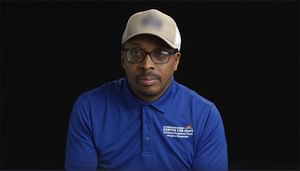
See why credible messengers are critical to community violence intervention.
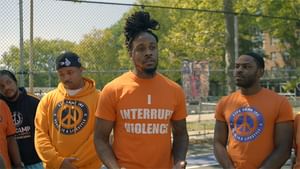
One thing good about our violence interrupters that we try to get people from the community that is credible.
They have relationships in all these zones then we travel in twos for safety
and we use the briefing take that information and they shared connected with the data
and then we'll be able to go out and extract in the community and see where those areas we need to target the most.
Many of the folks that are in the CVI space and the folks who are doing the frontline work
have maybe themselves been perpetrators of violence or they've been victims of violence.
Talking to the people that are the interrupters themselves.
That's a story of new life. It's a story of redemption.
All of that revolves around a person. So we call LTO, license to operate,
which is really one's credibility that is given to you by community in order to engage those that will have the highest chance of being shot or being a shooter.
People that are at the center of that cycle of violence.
I have lived experience.
46 years old.
The first time I've been shot, I was 14.
The last time I was shot, I was shot in my head.
That led to a hospital responder coming to my bedside,
asked me to go into a program that actually got me this job to be the first hospital responder for Grace Medical Center.
Community violence intervention is something indigenous to our community since we've been a community.
And so seeing this approach expanded across the country has really created opportunities for those with lived experience
and many of which have been system impacted where their past may have been a liability where in this work their past is actually an asset.
Me being a hospital setting that's even more important because
when somebody come to the hospital and they be like
oh damn yo man we was in Hagerstown together.
It's inspiration to them.
Oh you oh you did that.
Oh I know I can do it.
That's the credible messenger.
It's for me to show that I'm on the right path
and to get other people also on the right path.
I deal with giving them job opportunities.
If they don't have certain identifications while they walking around here,
I make sure they get that.
It make me feel good that I'm doing my job out here in these streets and changing lives.
I interrupt violence.
Our violence interrupters, they canvas this area.
They talk to business owners.
They talk to the people.
So, we don't just do it alone.
We do it in partnership with the community.
CVI includes different types of support that meet people at critical moments and help prevent future harm.
Violence interruption and mediation
Preventing a shooting, retaliation, or escalation of violence is at the core of CVI. This includes activities such as conflict mediation and resolution, prevention of retaliation, conflict de-escalation, proactive violence intervention, incident response, and the establishment of non-aggression agreements.
Street outreach
Credible messengers work to engage individuals who are at the highest risk for violence involvement. This relationship building can include providing resources and helping to connect individuals to support services.
Hospital‑based violence intervention
Hospitals play an important role in preventing future violence by supporting hospital-based violence intervention programs (HVIPs) and partnering with community-based organizations. HVIPs bring together doctors, nurses, social workers, and violence prevention professionals with lived experience to support people after a violent injury—helping reduce the risk of future harm.
Care begins at the bedside and continues in the community, helping people access the support, stability, and opportunities needed to heal and rebuild.
Life coaching
Life coaching involves the high-touch, intensive case management for individuals at the highest risk of violence, with a focus on helping individuals access critical resources and build skills to navigate and defuse conflict peacefully.
Peacemaker Fellowships
Peacemaker Fellowships involve identifying and recruiting individuals who are at highest risk of violence involvement in order to engage these individuals in a highly interactive and intensive program of transformational change. Fellowships often last 18 months, where fellows are guided and supported in the creation of life plans that build pathways to healthier lives that are free of violence.
Wraparound services
Wraparound services connect people to housing, job training, mental health care, education, and other resources that help build stability and support long-term recovery beyond the immediate crisis.
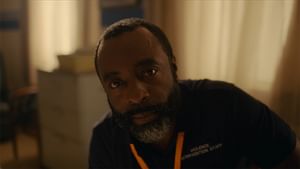
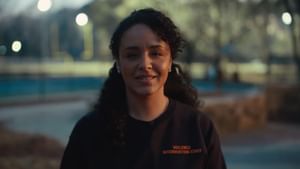
These videos bring to life moments of community violence intervention that are rarely seen by the public, but make a real difference every day. Through scenes of powerful firsthand conversations with trained violence interrupters, viewers can step into the experience of how these credible messengers engage with individuals to deescalate potential conflicts, build trust, and create different outcomes.
These videos are actor portrayals inspired by real-world experiences, not depictions of actual individuals.
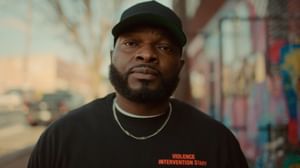
Justin: Ayo!
Your mom's worried about you.
How you holdin' up, bruh?
Male Voiceover: They shot my best friend...
That's how I'm holding up.
Graduation was right around the corner, man.
We had a plan...
You think I could just let that slide?
Justin: I've been there and I know the feeling...
I also know it doesn't end well and you got too much to lose.
Male Voiceover: Yeah...
Justin: It's hard right now but you gotta keep going.
Not just for you, but for him.
And those plans y'all talked about?
Let's make 'em happen.
Male Voiceover: I hear you.
Justin: Come on, let's get a bite to eat.
Male Voiceover: [Exhale]
Paul: Can I talk to you for a second?
I'm Paul, a violence intervention specialist.
How you feelin'?
Male voiceover: You're not my doctor.
Paul: You're right, I work here.
You're from up the street right?
Male voiceover: Yea, but when can I leave?
I got something I need to handle.
Paul: Yea? What's that?
Male voiceover: None of your business.
Paul: You know, when I got shot...
I was thinking the same thing, but it's not worth it.
Male voiceover: You think so, huh? So what do I do now?
Paul: Let's start by letting me know what you need.
Now, getting shot is a lot to heal from.
Not just your body, but also your mind too.
And I'm here to help you through it.
Let's focus on getting you on your feet...instead of getting event.
Male voiceover: I'm listening.
Paola: Haven't seen you in awhile.
You been going to those classes?
Male voiceover: Nah
Paola: C’mon, talk to me, problems at work? Your lady? Your boys?
Male voiceover: There's always something.
There's this guy, I swear if he plays with me one more time, it's not gonna end well.
Paola: Ok… and where has that gotten you in the past? What did we talk about?
Control your mindset and you control your actions, right?
Take a breath, right now.
Good...Now we can think it through.
It hasn't been easy, and your grandmother's sick, too.
I know how hard that can be but I also know you have what it takes to get through this.
I'll call you tomorrow.
We'll keep talking.
Male voiceover: [Exhale]
CVI programs across the U.S. have demonstrated:
Over the last three years, many cities across the country have seen notable declines in homicides. Cities investing in comprehensive safety strategies — including community violence intervention — are seeing meaningful and sustained progress.
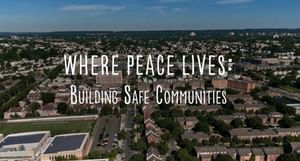
Where Peace Lives: Building Safe Communities introduces community violence intervention and shines a light on the lifesaving work being done across the country and the CVI professionals and trained credible messengers helping to make our communities safer every day. Through candid conversations with leaders and practitioners, this short documentary film offers viewers an introduction on how CVI operates and how it works to prevent violence and promote healing.
I'm running into every fire, every day for 37 years.
This the work we do.
We ain't got no vests, no guns or nothing, but we got our heart. We got a love for our community.
Anytime these interrupters come out here and put their life on the line so everybody can go home with their life is a powerful powerful thing.
Community violence intervention is really about communities transforming pain into purpose.
There is a new and innovative way for us to create and sustain safety and that's CVI.
CVI works because gun violence is preventable and we actually can also see that it works with data.
2023 was the single largest decrease in gun violence in history, 13%. And then in 2024, we beat that 16%.
And we're continuing to see these numbers go down.
And in some cities, they're seeing lower rates and amounts of gun violence than ever in recorded history.
All right, bro. Good seeing you, bro.
Community violence intervention is an absolutely essential part of preventing gun injuries and gun deaths in this country. Far few people actually know what CVI means.
Hear from CVI leaders and professionals who demonstrate what safety looks like when communities lead.
Safe Streets // Baltimore, MD
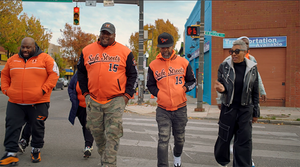
LIFE Camp // Jamaica, NY
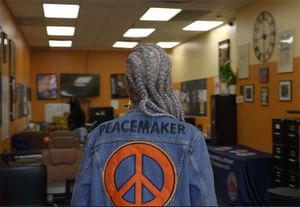
Urban Peace Institute // Los Angeles, CA
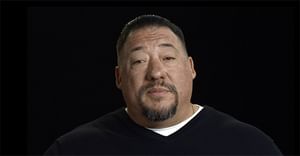
I am you, you are me.
We’re each other.
Even though I don’t know you. Right? Even though you don’t know me.
But if I can lean in and understand that we are really about love and energy that is more
similar than different, and understanding that we’re all connected.
And recognizing that violence affects all of us. Community Violence Intervention workers, staff, we work with the highest risk.
We work with people who are likely to shoot and kill someone. So a credible messenger is someone who has lived it. They go in and stop shootings and killings. They do it because they know who the players are, right?
They’ve been a part of the posses. They’re the men and women who are using their experience to save lives.
And now they’re seen in that same community as hope. They’re seen in that same
community as potential. They’re seen in that same community as the solution. Because their goal is to prevent the thing from happening. They get a call, they go to a specific situation. They say, “Listen, I did that. Don’t do what I did.”
There have been guns drawn when this is happening. And because they’re a part of the relationship, they are people who people trust. Their likelihood to stop something is much greater than someone who doesn’t have those relationships.
You know, when the artist did this, it kind of, it hit home. We call this the golden hour. Using that vulnerable time when someone is hurt, and then someone who’s been hurt or may have hurt says, listen, “You might want to think about how you’re moving.” So we use that golden opportunity, that opening, to say, “Don’t do it.”
And Baltimore and across the United States, Community Violence Intervention is looking at violence as a disease. A disease that can be cured, a disease that has a treatment plan like cancer.
The disease is not just the victim or the person shooting, it is a community normalization of violence. We have to treat people who witness it. We have to treat victims who shoot. We have to treat people who’ve been shot.
When I started this work in Baltimore, we had average 300 and something homicides per year. We have seen a 52% reduction in violence. I want people to know that people are
committed to saving lives in Baltimore.
We can all agree that we are all responsible.
We can all agree that there are many ways to address violence.
We can all agree that there are many ways to address violence. ,
We can all agree that we can do something.
I'm running into every fire every day for 37 years. I don't say no.
It's more than just taking a gun out their hand. If you change their mindset, then they going to view the world different.
I started at three when my father was killed in the Vietnam War. It was displaced trauma. I saw him go to war to save lives. And I guess at that point, it's my DNA.
Life Camp is an organization that I founded in 2002. The work is around focusing on those young people that the world doesn't care about and helping to reduce and change the system of violence that existed in our community.
We went 865 days without no one being shot. We went 4 years without no one being killed.
Y'all are the key. y'all the oxygen mask to pump new love and new life and new hope into their souls, into their hearts.
This block was a very dangerous block. A lot of folks were killed, a lot of violence, and now, you know, we were able to transition the culture of what took place on these corners. So, a lot of the people who come from these blocks work with us now.
It's for me to show that I'm on the right path and to get other people also on the right path. I deal with giving them job opportunities. If they don't have certain identifications while they walking around here, I make sure they get that. It make me feel good that I'm doing my job out here in these streets and changing lives. I interrupt violence.
Our violence interrupters, they canvas this area. They talk to business owners. They talk to the people. So, we don't just do it alone. We do it in partnership with the community.
The police called my chief of streets and they work together and then my chief shows up on a street side and keeps calm, keeps order.
So we pull up with peace, we pull up with life.
Just the bus coming on your block alone.
It's 35 ft of pure life because it's bright. It's big.
We pull up in communities and there's a situation, people don't want to talk cuz they're really in a place of trauma.
We can use the bus as mediation because this is Switzerland neutral territory.
This is our nutrition kitchen. Families learn how to make healthy meals, healthy snacks because in our communities, we're in a food desert.
There's many different pieces to the ecosystem of community violence intervention.
Those brothers and sisters on that front line, they are credible messengers.
They come from the same community that these folks come from.
They are inherent to the culture and the nuances that created the violence and that can change the violence.
I go into the juvenile justice facilities and work with the justice impacted youth from the community so that when they transition back into the community, they have a clearer path maybe or some guidance.
It's easier for them to kind of maneuver through certain things when they know they have a good support system or they know they have people just listen to them or care.
I'm 60. So either they're children of someone, they've worked in the field, we've grew up together because the people of the community is the soil and the fabric to change that community.
I know who to bring on the team so that we have real credible messengers.
I came home from college, got a good job, and um I fell to the streets. I've been shot a few times. I got out of that, became a family man.
When Erica started this, she kept telling me she needed me cuz she knew what I could bring.
We're here to change everybody. The sons, the daughters, whatever we could change, I want to do that. I want to be a part of that.
Peace
is a lifestyle.
Peace
is a lifestyle.
Peace
is a lifestyle.
We already have a connection with everybody.
People actually do respect us in the community and when they see us they know we don't mean no harm that we actually trying to help them and we want the best for them.
Community violence intervention workers need to be looked at as human beings who are helping save lives while they risk their own.
The number of young people who are alive is what I'm most proud of because I literally know there is people who would not be alive if it was not for Life Camp
and parents who lost their children and are able to move on past that that breaking point.
And then the hundreds of leaders that we created
that we gave birth to
that is duplicating our work
that's carrying Orange on to another level
rolling through their streets and making sure peace is real for our people.
We all want our children to be safe and that's why it's community violence intervention
cuz we all live in the community.
No matter what community you come from,
we're in this world.
Appreciate you. Love you.
They trying to get a tear on camera.
How you doing? I came into this work about 20 years ago.
This work was given to me.
I mean, it was handed off and cultivated by elders that have been doing this work for a long time.
And it's something that I honor.
This is us right here. Right. This is a big area right here. Yeah. It's a very, very large area.
My work is really to help build power, help support people in their personal transformations as we transform and build new systems that are going to contribute to public safety in a different way.
At the core of what CVI is is you have violence interruption.
You have conflict mediation.
You have case management and life coaching.
There's 150 intervention workers that are working all the time to help deescalate and prevent things from actually happening.
Putting together activities, ways to engage, you know, the young people that are at the center of a lot of this and and providing other um opportunities.
For us, it's very clear that that CVI works.
The Urban Peace Institute is the academy to train folks.
We had to build the curriculum. It had to be reflective of reality and reflective of the streets.
So about 80% of it is by practitioners, people who have been there, done that, people who are doing the work currently.
Some younger folks that we're bringing in, of course, then we have some of the older folks that have been doing it for a long time there.
Right? People that have a lot of that respect.
And then we can bring in other professionals from other fields.
The training is specific to the needs of the community.
I've always said that the people in the communities, they don't care how much you know until they know how much you care.
Right?
We have to understand that if you're not interrupting violence, that is not the core CVI.
My little homies know me like, so I already had that respect coming out.
I'm able to communicate with these youngsters a little more.
The license to operate is really one's credibility that is given to you by community in order to engage those that will have the highest chance of being shot or being a shooter.
People that are at the center of that cycle of violence.
A license to operate is one of the best tools that you could have because that allows you to maneuver in your community.
I actually had to do this work in order to keep myself straight and to be living the life that that's going to fulfill me right in in the long run.
So understanding that we're not going to be able to stop everything, but hopefully with the relations that we're fostering, it will allow us, you know, to prevent a lot of the stuff that may happen if we were not there.
The CVI lane is very specific to working with the population that is at the center of the cycle of violence and you're working directly with them in order to reduce the likelihood of violence to help transform their lives and create offramps into a better life.
The urban pieces we don't just work with one organization work with all the organizations in the city. Hey, how's it going? Good. You know, we have that connector role.
Arise Go services Harbor City.
This is one of the body shops of a community member and we send some of our participants over here and so they help them out with like, you know, life skill classes, work, work ready experience, you know, hands-on experience and stuff like that.
So, CVI doing that work is not just us, right? is about everybody. All these other um individuals like the families, the the the businesses, you know, they play a major role in what's going on here in the communities.
That's why like food giveaways are bigger than just food giveaways.
Got the homies working out here that's occupying their time. Like you're dropping those seeds, right?
In LA, as we have a lot of Latinos, Chicano communities, the conversations are different.
It's family. It's community, you know, interactions are different. It's culturally appropriate and responsive to where our communities are at.
Intervention is very connected to the culture that we come from, right?
Those beliefs that we learn either in Mexico, what we learn in our household, the way that we operate, the way that we connect with our community members looks different.
It's so family oriented.
So mostly everybody that lives here, right, are related to somebody.
My community, my older homeboys I consider them as my family because we've been embedded in their life for such a long time. I think that's the beauty of it.
Helping those who we love that and the community that we come from is very inspiring and and fulfilling.
CVI is giving people hope and approaching young people with compassion and love to provide opportunities for them that's always existed for generations.

Community violence intervention is happening in communities all across the country. When this work is supported by residents, leaders, neighbors and local institutions, safety becomes something a community can count on.
You can help strengthen community-led safety by learning more, sharing what you know, and supporting local organizations doing this work.
Together, we can help every community thrive.
Community violence intervention (CVI) prevents violence by deploying coordinated, community-driven strategies. It uses trained credible messengers to defuse conflicts, stop retaliation, and connect at-risk individuals to essential resources like counseling and job training.
Credible messengers are trusted members of a community with local experience and strong relationships. They make community violence intervention (CVI) possible by mediating conflicts, building trust, and safely intervening during difficult moments to prevent violence.
The community violence intervention (CVI) ecosystem includes violence interruption, street outreach, hospital-based violence intervention, life coaching, Peacemaker Fellowships, and wraparound services that support long-term stability such as housing and mental health care.
Community violence intervention (CVI) programs across the U.S. have been shown to reduce shootings and homicides, lower repeat injury rates for survivors, and improve overall stability and opportunity for individuals receiving support services.